
Time to disconnect the bogie from the trailer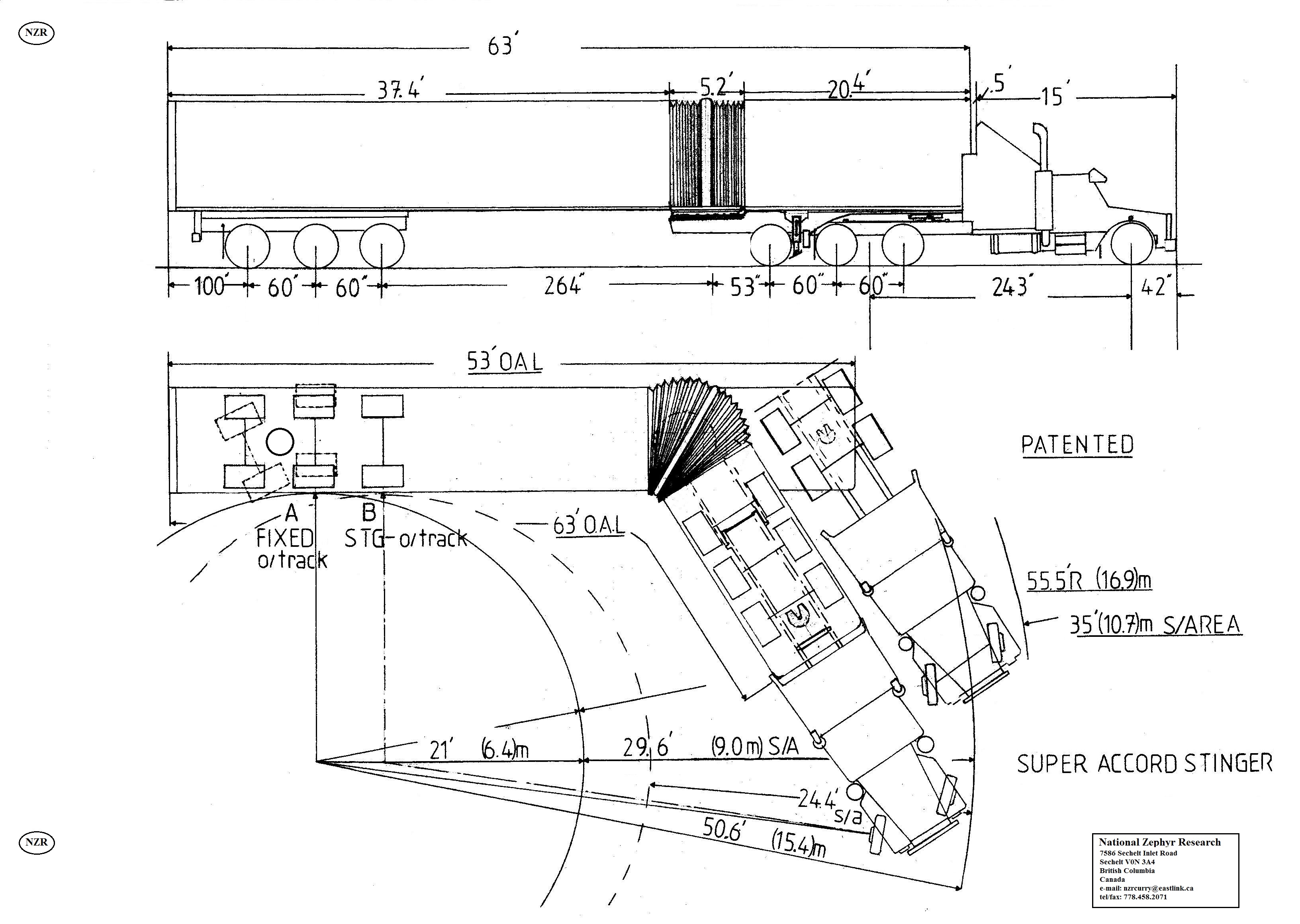

Long-Load (mechanical) Steering Dollies
The objective of a steering trailer is to improve maneuverability and lower the rolling resistance of the trailer saving tires and fuel. Ideally, one should be able to improve productivity to gain a short (two yr) pay back of the capital expense by upgrading. In some jurisdictions as with the EU. for example; Min/max “swept area” requirements within which the tractor trailer must maneuver 19.7′ (6 m) and 41′ (12.5M) in order to be legal. We have similar regulations governing ingress and egress regarding forward length i.e. 41′ (12.5m) center of rear axle to kingpin, this rule can be met using a steering trailer.
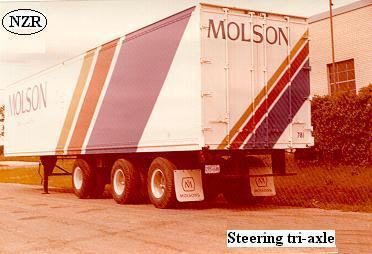
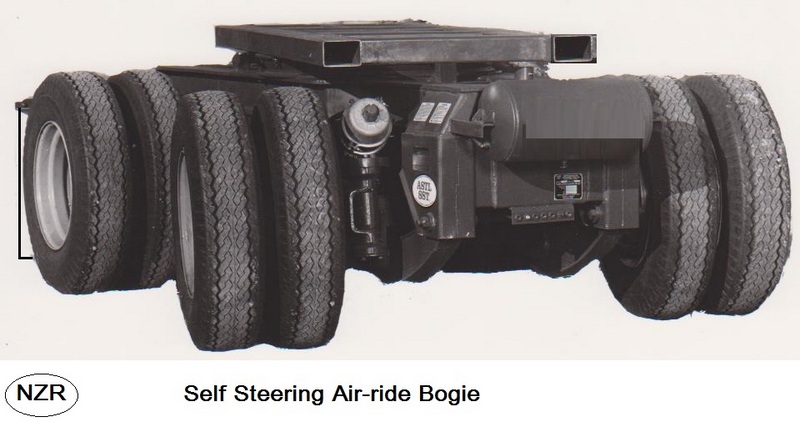
Steering bogies can move the rear effective axis (REA) 10′ forward of the bogie center reducing forward length and off-tracking and are available in both spring or air-ride suspension. They can equipped with automotive e-drive axles, have no-slack tie-rod steering components, anti-lock brakes and conform to MVSS121.
Steering bogies can be attached to the slider assembly in approximately one hour. An electro-hydraulic override system is an option for remote maneuvering and backing. Electronic steering can be operated from the cab.
Extensive testing of these steering bogies has been carried out by DoT Canada with SAE and NRC research papers presented. These studies are available on request.
Steering bogies are designed for 53′, 63′ or 73′ Van and Platform semi-trailers and for long-load applications. Rear under-ride protection is improved with these applications, a steering bogie carries the ICC bumper and tires remaining as under-ride protection. Semi-trailers maneuverability is improved as are ingress and egress issues with this type of running gear.
The Next Generation- ACCORD Semi-trailers with steering bogie
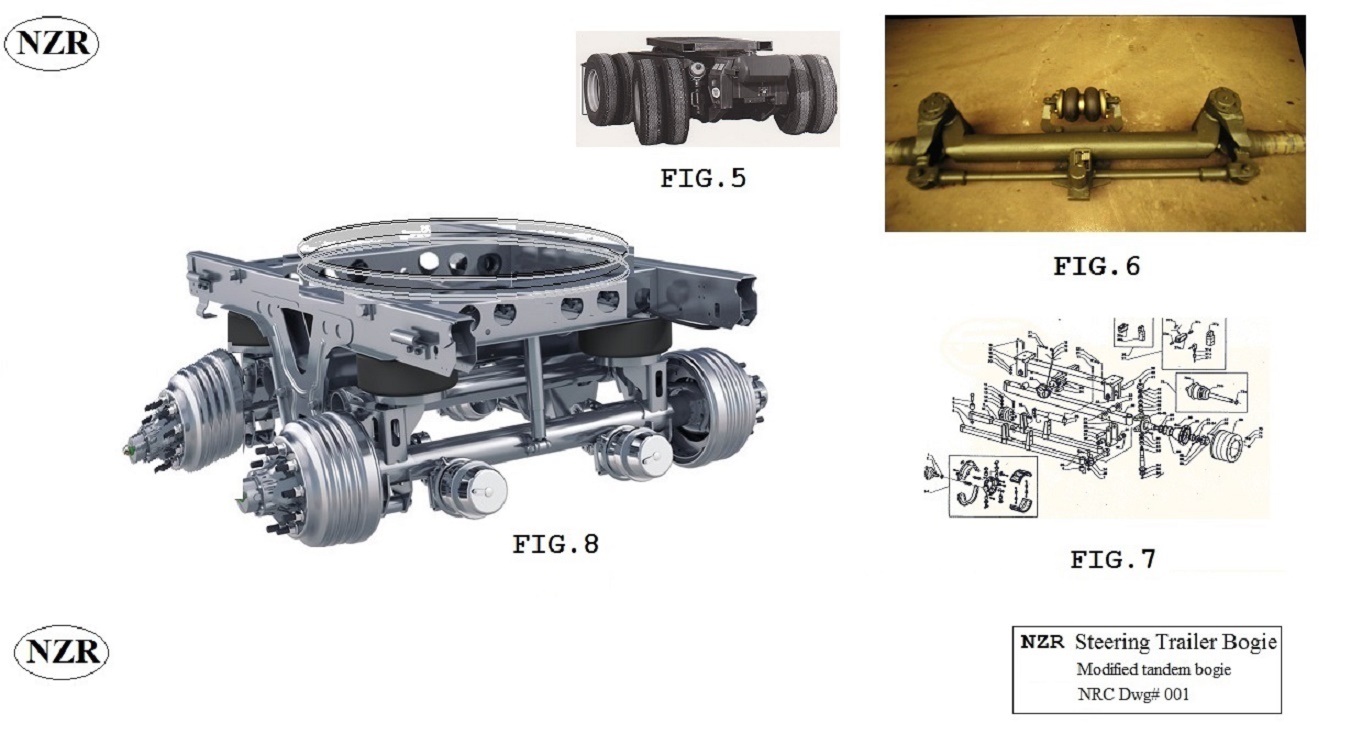

Longer semi-trailers must comply with “forward length” requirements (41′ KP to RA) for this reason steering bogies overcome ingress and egress issues. Steering bogies automatically reduce forward length up to 10 feet. They may be installed to the slider rail in approx 60 minutes. They may improve maneuverability 19%. The need to slide the bogie forward to comply with FL may cause the bogie to be overloaded. Curbing incidents and tire damage will reduce these issues. They will pull easy in a turn and reduce fuel consumption as a result. Common torquing of the trailer body and main rail is reduced due to reduced side force.
In a tri-axle configuration the forward axle is the REA (Rear effective Axis) only minor scuffing results with use of a steering bogie. Tire life are certainly to improve with additional fuel savings.
Backing a conventional semi-trailer with the steering bogie can be achieved with an electro-hydraulic over-ride controlled from the cab, some training may be necessary. The steering bogie may also be locked in place at anytime and is sometimes required in certain jurisdictions. There is a DOT requirement in Canada to lock steering axles above 50 kph. Steering bogies are design to fail safe and will simply dog-track, signalling a flat tire or malfunction.
 National Zephyr Research